

Each Measure Feature: Mortal Prophets
FEATURE
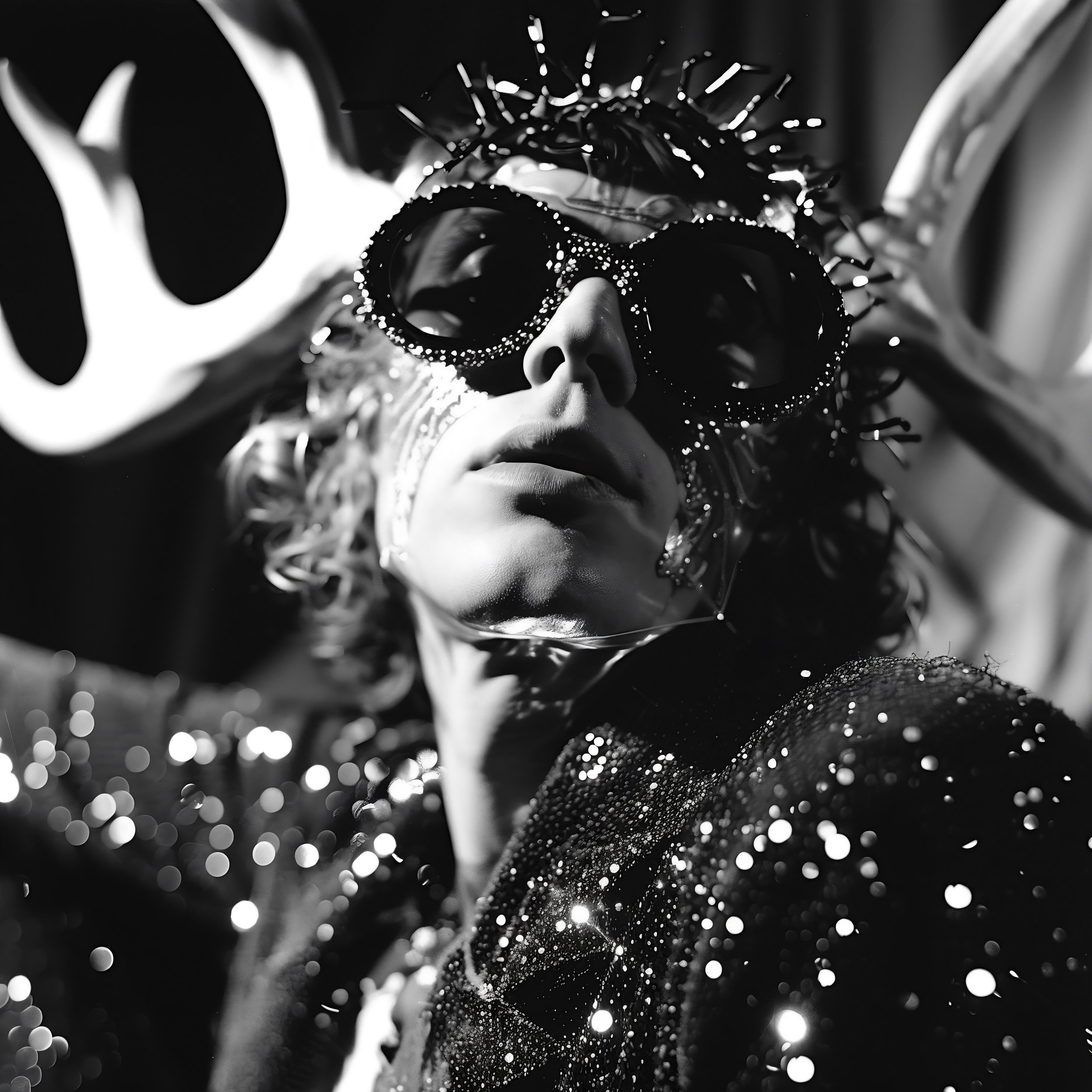
In a world where media seems to be increasingly dictated by social media algorithms, AI slop, and cheap dopamine hits, it’s easy to feel like artistic visionaries have given up on taking risks, and anything truly underground is doomed to a life of obscurity. John Beckmann’s project, the Mortal Prophets, proves that experimental art is alive and well, even in the realm of pop music. Case in point is their latest release, Hide Inside the Moon. The album is a rare gem of a find and a masterclass in avant-garde music.
Hide Inside the Moon is a 41-minute experimental odyssey flavored with Beckmann’s taste for anything provocative and cast in shades of post-punk, shoegaze, new wave, and psychedelia. It’s less of a linear journey and more of an unfolding fractal, spiraling deeper into its exploration of humanity’s relationship with art in the post-modern era with each track.
The Mortal Prophets draw heavy inspiration from the underground soundscapes and countercultural voices of the latter half of the 20th century. In some instances – as on original tracks like “My Future Past,” “Devil Doll,” and “I’m Her Honey” – they are invoked via tonal echoes of past artistic movements. In others, they are summoned directly. Amid Beckmann’s original compositions, there are poems by Sylvia Plath and Mina Loy set to music, a cover of “I’m a Hermit” from the 1970 release of Kenneth Anger’s Puce Moment, an ode to Cy Twombly, and a cover of “Blue Velvet.”
But make no mistake, Beckmann has mastered difference between inspiration and derivation. The covers sound nothing like the originals and are instead given a strange and beautiful avant-garde repainting, and Beckmann uses whispers of a psychedelic age that Plath and Loy never lived to hear in order to make their poetry sound as haunting as they intended.
Hide Inside the Moon isn’t a failed attempt to recreate the past. It’s a successful experiment in recontextualization. Beckmann decorates his gallery with preexisting artifacts and works inspired by old masters, but he recasts them in modern production techniques, a timeless gift for surreal and dreamlike melodies, and a detached, deadpan delivery that forces us into an awareness of our roles as observers of a bygone era rather than active participants.
Hide Inside the Moon honors a long history of experimental art without yielding to it or pretending to inhabit an era that doesn’t exist anymore. The result is a new work that’s as sincere and quietly brutal as its predecessors, free of the rose-colored tint of nostalgia, and still relevant in a world that needs surrealism as much as ever.
KEEP UP WITH MORTAL PROPHETS BELOW: