

Each Measure Review: Michellar
FEATURE
59 years ago, the Beatles taught us “All you need is love,” and these words are as true today as they were in 1967. Yet watching the world stage unfold, it’s easy to feel like we haven’t learned anything since then, and war and conflict seems to remain constant.
If we didn’t have music and art to help us process the chaos currently raging around the globe, things like war and death would be impossible to cope with.
Thankfully, there are people like Michellar.
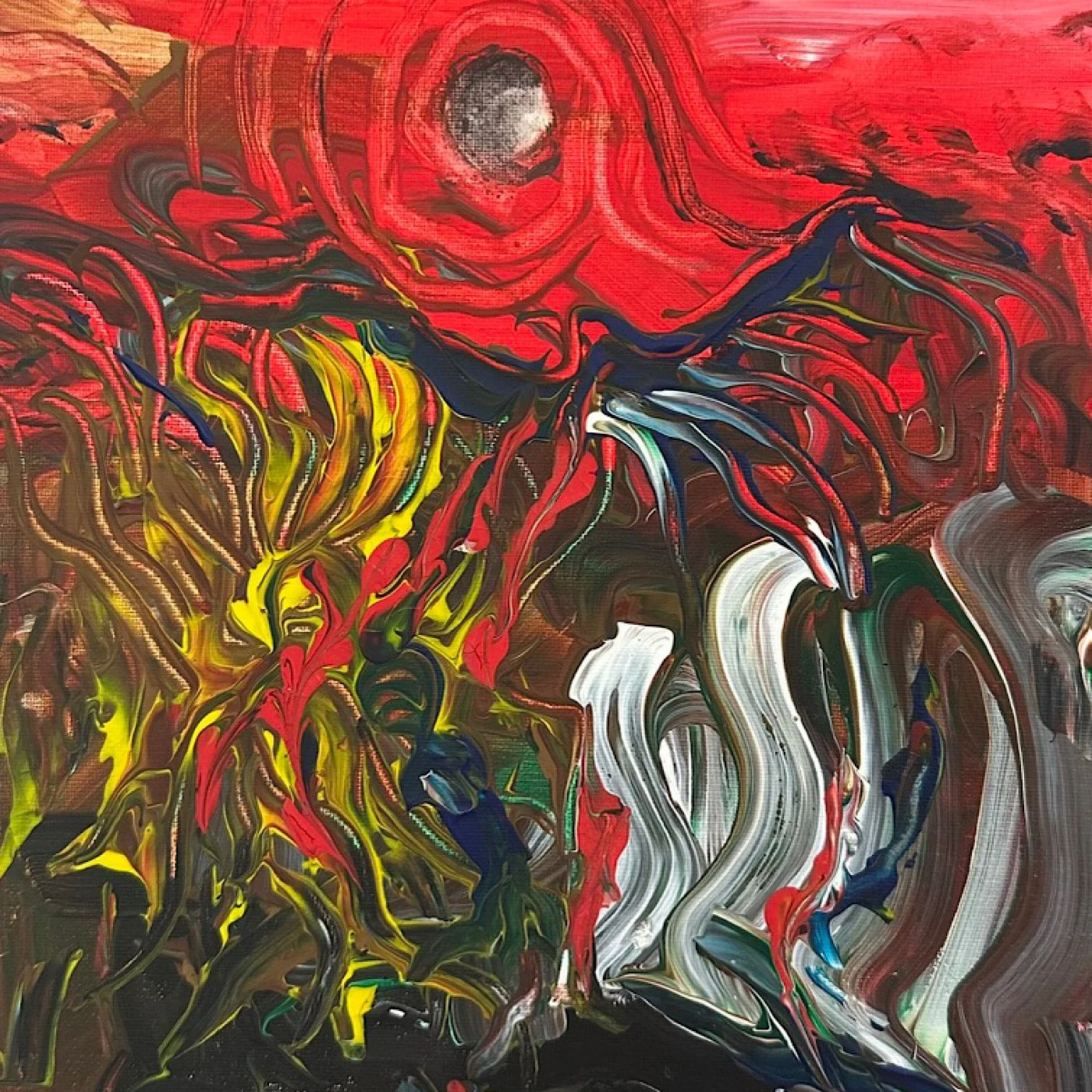
Michellar is an artist in every sense of the word. Her talent for colorful, abstract painting earned her an acceptance to the deYoung Museum Open Call Exhibition, and it was that recognition that inspired her to revisit her teenage passion for songwriting after a 40-year hiatus. She went on to release an impressive 22 singles in 9 months, and we at Each Measure have had the honor reviewing a number of her singles and Eps in the years since.
Like her paintings, Michellar’s music is evocative, vibrant, and often feels like a sigh of relief in a hectic world. In all her work, she demonstrates a profound understanding of the power of creativity – not only to capture the human experience, but also to inspire change. Her latest release, a single called “LOVE PEACE WAR,” is a perfect example. As the title suggests, it’s a modern anti-war ballad that represents a bold confrontation of some of the heaviest subject matter imaginable, and Michellar handles it all with an extraordinary grace.
Michellar is based in San Francisco, and she has been open about the influence of the Bay Area on her work. The sights and sounds of the Haight-Ashbury district are especially strong on “LOVE PEACE WAR.” It echoes many of the strongest San Francisco-based countercultural voices of the Vietnam War era, like Scott Mckenzie and Jefferson Airplane (in their quieter moments) as well as East Coast and Laurel Canyon folk singers like Joan Baez and Joni Mitchell.
Michellar sets her observations about war and tragedy against a soft, lullaby-like acoustic melody, occasionally harmonizing with herself in signature songbird warmth. That’s because this isn’t a song about grief and mourning. It’s a song about healing. According to Michellar, it was the Ukraine War that inspired her to write “LOVE PEACE WAR.” It’s clear that the song was her way of processing the unspeakable and remaining grounded in the face of global trauma. And ultimately, the positive message at the heart of the song isn’t just for her. It’s for all of us – a reminder to hold fast to our humanity when the world seems to be working against us.
As always, Michellar’s biggest strength on “LOVE PEACE WAR” is her lyrics. Her poetry tends towards simple, singable language, making it easy for all types of audiences to join in and relate. But the simplicity is deceptive. All her words hold a wealth of meaning and double-meaning, and she chooses each one with care and deliberation.
In the verses, Michellar takes on a detached, observant tone, opening with the lines, “The world has come to war, and many men have lost their souls / Far away from home.” It’s a brilliantly blunt way to establish her theme, and she sounds almost matter-of-fact. Yet her choice of the world “soul” holds a wealth of depth. For all the death, destruction, and oppression war can bring, what is most at stake is often our humanity, and the brutal truth of war is that no matter who wins, both sides suffer.
She elevates the pathos even further in the second verse, where she appeals to one of the most horrific images possible: “Guns are killing children, take their childhood from their parents.” There’s nothing more senseless or shocking than the violent death of children (as Michellar puts it, “And even though we try and understand the reasons why / We can’t take no more”), and that’s what makes it such a power condemnation of war.
As painful as these images are, Michellar doesn’t shy away from them. She’s straightforward in her language, resisting the urge to soften it with metaphor or vagueness. It’s a bitter pill to swallow, but a necessary one. Why? Because change only happens when we confront the truth. Michellar has noticed that human nature often comes with the tendency to hide from anything we don’t want to see, but how can we help if we’re afraid to look? As Michellar sings in the third verse, “So we found ourselves in times of death and suicide / We turn away, turn away / To those whose minds and spirits have broken down in the street / We look away, look away.” Through her song, Michellar refuses to let us look away any longer. She knows that until we’re willing to confront the problem, we’ll never solve it.
But as always, the million-dollar question remains: what is anyone supposed to do about something as tremendous and all-consuming as war? For Michellar, the answer begins with faith. “There is a tomorrow when we find ourselves in sorrow / We should pray, just pray / For all the souls who suffer. In their lives we should gather / All our strength today,” she sings in the final verse. If nothing else, Michellar suggests that we refuse to accept war as an inevitability and reorient our mindsets towards empathy and solidarity.
Still, as much as the song is about war, it’s also about love and peace. In each chorus, Michellartakes a moment to remind us that peace begins with love. An interesting is staple of Michellar’ssongwriting is her tendency to alter the chorus each time she sings it. Although she understands the value of repetition, she rarely sings any section the same way twice. It’s a great way to develop themes and tease out multiple meanings in such a short song. In “LOVE PEACE WAR,” each verse gives her an opportunity to explore the power of love and the nature of peace. Throughout the song, she muses that, “Love is all that we need… To make peace… To find peace… to have peace… to give them peace, inner peace…to heal.” Love does all of those things, and it’s the key to creating peace both in the world, and in ourselves.
For me, it’s the bridge of the song that’s the most memorable. Michellar repeats it three times, altering the lyrics with each iteration. It’s just two short lines about the value of hope in moments of sorrow, and in my ears, the second line sums up the message of the song succinctly and beautifully, “Hope we bring so we can sing.” It’s hard to maintain hope, especially in times like these, but these are also the times when hope is most essential. That’s why we need songs of peace and love to remind us that goodness exists and that a better tomorrow is possible.
So, why are songs like this so important?
Because they don’t let us hide from the truth.
Because they soothe our pain.
Because they inspire hope and change.
If you need more of Michellar, there’s good news on the horizon. “LOVE PEACE WAR” was released as a teaser of her “Homegrown” EP, which is set to become available in late summer of 2026. According to the artist, “Homegrown” will deliver the same Haight-Ashbury feel as “LOVE PEACE WAR,” and hopefully, it will bring us all a little more peace.
KEEP UP WITH MICHELLAR BELOW: